

How to Tell if Coffee Beans Are Fresh
Table of Contents
- Why Freshness Matters: The Science of Coffee Degradation
- Check the Roast Date on Your Coffee Beans
- Perform the Coffee Bloom Test
- Inspect Color, Oil, and Surface Texture
- Evaluate Aroma and Fragrance
- How to Store Coffee Beans for Maximum Freshness
- Taste Test: What Stale Coffee Tastes Like
- Conclusion
Last Updated: August 16, 2026
Why Freshness Matters: The Science of Coffee Degradation
Fresh coffee tastes dramatically better than stale coffee. The difference comes down to chemistry. When beans are roasted, they release carbon dioxide and volatile aromatic compounds that give coffee its flavor and aroma. Over time, these compounds escape into the air, oxidation sets in, and the oils that coat the beans begin to turn rancid. What you're left with is flat, bitter coffee that tastes nothing like what the roaster intended.
Understanding how to tell if coffee beans are fresh is essential for anyone serious about their morning cup. Stale beans won't produce the bright acidity, complex flavor notes, or rich body that make specialty coffee worth seeking out. Instead, you get a one-dimensional, often unpleasant cup. The good news is that detecting freshness isn't complicated, you just need to know what to look for.
At The Holy Grounds Coffee Co, we roast beans to order specifically to prevent this degradation. Every batch ships with a roast date printed on the bag, and our fast delivery means your beans arrive at peak flavor. But whether you're buying from us or sourcing beans elsewhere, the ability to assess freshness yourself is a skill that transforms your coffee experience. Below, we'll walk you through the most reliable methods to evaluate whether your beans are truly fresh.
Check the Roast Date on Your Coffee Beans
The roast date is your first line of defense when evaluating freshness. This single piece of information tells you exactly when the beans were roasted, which is far more useful than an expiration date. Most specialty coffee roasters print the roast date directly on the bag, it's the most transparent way to communicate freshness.
Coffee reaches peak flavor between 5 and 14 days after roasting. During this window, the degassing process (where carbon dioxide escapes from the beans) is still active, and the flavor compounds are at their most vibrant. Beans roasted less than 5 days ago may still be releasing too much CO2, which can interfere with extraction during brewing. Beans older than 14 days begin to lose their brightness and complexity.
The difference between a coffee roast date vs expiration date is crucial to understand. An expiration date tells you when a product becomes unsafe to consume, for coffee, this is typically 6 to 12 months after roasting, depending on storage conditions. A roast date tells you when the beans were roasted and helps you pinpoint the optimal window for flavor. A bag labeled "best by December 2026" is nearly useless; a bag labeled "roasted August 10, 2026" gives you actionable information.
When shopping, look for bags that clearly display the roast date. If a bag doesn't have one, that's a red flag. Reputable roasters, including The Holy Grounds Coffee Co, always include this information because they stand behind their product's freshness. If you're buying from a local roaster or café, ask when the beans were roasted. Any roaster worth their salt will know the answer immediately.
Perform the Coffee Bloom Test
The bloom test is one of the most reliable indicators of freshness, and it's simple enough to perform at home. When you pour hot water over fresh coffee grounds, they release a burst of carbon dioxide, which causes the grounds to puff up and create a visible dome or "bloom." This happens because fresh beans still contain dissolved CO2 from the roasting process.
Here's how to perform it: grind your beans immediately before brewing, then pour just enough hot water to saturate the grounds without fully brewing. Wait 30 to 45 seconds and observe. Fresh beans will bloom noticeably, you'll see the grounds rise, bubble, and sometimes even make a slight hissing sound. Stale beans produce little to no bloom. The grounds may barely move, and you won't see the characteristic puffing action.
The bloom test works because it directly measures the degassing process. Fresh beans are still actively releasing carbon dioxide. Stale beans have already lost most of this gas, so there's nothing left to create that dramatic bloom. This test is so reliable that many coffee professionals use it as their primary freshness check.
One important note: the bloom test works best with medium to coarse grounds. If your grind is too fine, the grounds pack too densely for the bloom to be visually obvious. Use a grinder that gives you consistent particle size, either a burr grinder for precision or a blade grinder for quick grinding. The Burr Coffee Grinder, KF8024 from The Holy Grounds Coffee Co offers adjustable settings that let you dial in the exact grind size you need for this test.

Inspect Color, Oil, and Surface Texture
Visual inspection reveals a lot about coffee bean freshness. Fresh beans have a glossy, slightly oily surface. This oil coating isn't a flaw, it's evidence that the beans are still releasing the compounds that give coffee its flavor and aroma. The surface should appear dark and rich, with a subtle sheen under light.
Stale beans look dull and flat. The surface becomes matte as the oils oxidize and dry out. You might also notice a grainy or chalky appearance, which indicates that the oils have completely evaporated and oxidation has begun to break down the bean's structure. In extreme cases, stale beans can develop a grayish coating, which signals significant degradation.
Color consistency also matters. Fresh beans from the same batch should look relatively uniform in color. If you see significant variation, some beans much darker or lighter than others, it could indicate uneven roasting or that the batch has been sitting around long enough for oxidation to affect different beans at different rates.
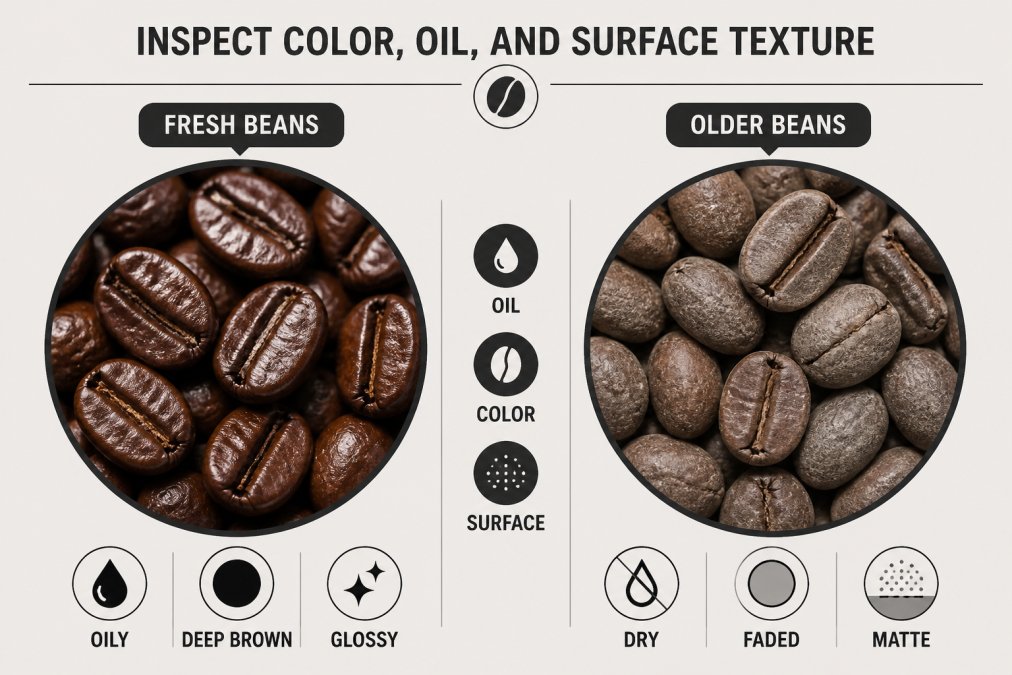
Run your fingers across a handful of beans. Fresh beans feel slightly tacky due to the surface oils. If the beans feel completely dry and brittle, they're stale. If they feel sticky or clumpy, that suggests moisture has gotten into the bag, a sign of poor storage that will accelerate staleness.
The importance of roast dates ties directly to what you're seeing. Beans roasted within the last two weeks will almost always show this glossy appearance. After 30 days, the visual difference becomes obvious even to an untrained eye.
Evaluate Aroma and Fragrance
Aroma is perhaps the most immediate indicator of freshness. Fresh coffee beans have a strong, complex fragrance that hits you the moment you open the bag. The scent should be rich and inviting, with subtle notes that hint at the beans' origin and roast profile. A bag of fresh single-origin beans might smell fruity, floral, or earthy depending on where they were grown and how they were roasted.
Stale beans produce a flat, muted aroma. The fragrance becomes one-dimensional and often develops a slightly musty or cardboard-like quality. If you open a bag and the smell is barely noticeable, the beans have lost most of their volatile aromatic compounds. If the aroma smells rancid or off in any way, the oils have begun to spoil, don't use these beans.
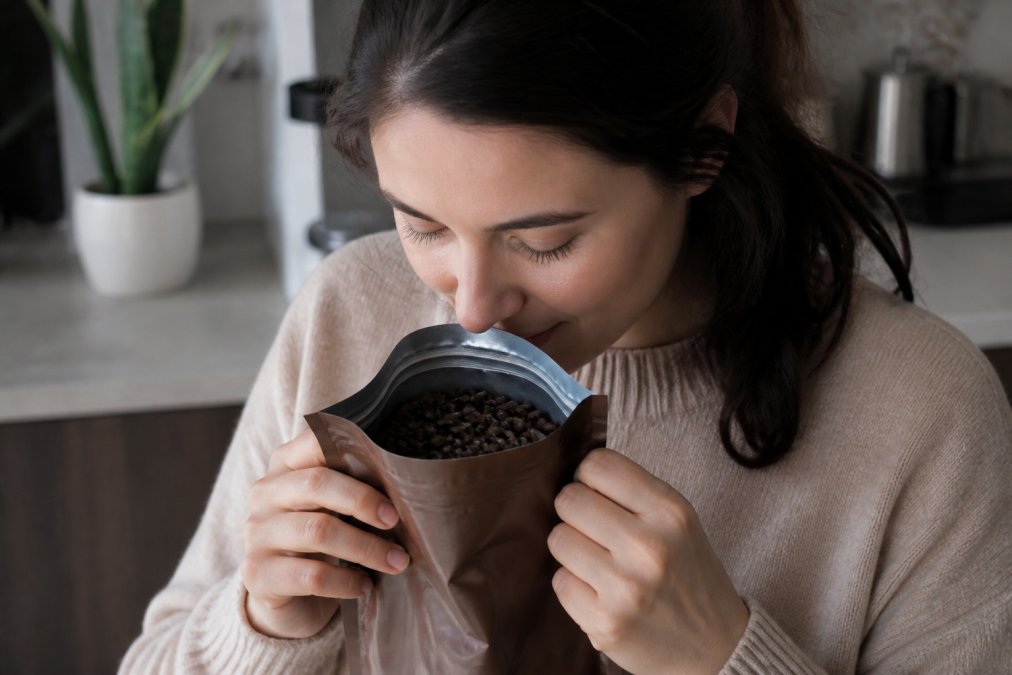
The coffee bloom test and aroma evaluation work together. As the bloom releases carbon dioxide, it also carries aromatic compounds into the air, intensifying the smell. This is why fresh beans smell so much better when you're brewing them compared to when you first open the bag.
To properly evaluate aroma, grind a small amount of beans and smell them immediately. Don't wait, volatile compounds dissipate quickly once the beans are ground. The Blade Coffee Grinder, KF2150 from The Holy Grounds Coffee Co grinds beans quickly, so you can perform this test immediately and get an accurate read on the beans' state.

Different origins have different aromatic profiles. Brazilian beans might smell nutty and chocolatey. Ethiopian beans often have fruity or floral notes. Understanding what to expect from your specific beans helps you identify when something's off. If your Ethiopian single-origin suddenly smells like generic coffee, freshness is the likely culprit.
How to Store Coffee Beans for Maximum Freshness
Storage is where most people sabotage their fresh coffee. Even the best beans will go stale quickly if stored improperly. The enemies of coffee freshness are air, light, heat, and moisture. Your goal is to minimize exposure to all four.
The best container for how to store coffee beans for maximum freshness is an airtight container kept in a cool, dark place. A sealed bag with a one-way valve works well, the valve lets carbon dioxide escape without letting oxygen in. Many specialty roasters, including The Holy Grounds Coffee Co, use bags designed specifically for this purpose. The valve is crucial because it prevents the buildup of pressure inside the bag, which could cause it to burst, while still protecting the beans from oxidation.
Keep your beans in a pantry, cupboard, or drawer, anywhere dark and cool. Room temperature (around 70°F) is ideal. Never store beans in the refrigerator or freezer. The temperature fluctuations and moisture exposure will degrade them faster than leaving them on the counter. The freezer is a common mistake; people think cold will preserve freshness, but the repeated condensation that occurs when you remove and return beans to the freezer introduces moisture that accelerates staling.
Avoid clear containers or transparent bags. Light exposure triggers oxidation, which is why most quality coffee comes in opaque bags. If you transfer beans to a container, choose one that's opaque or dark-colored. Glass containers with rubber seals work well, as do vacuum-sealed bags.
Buy beans in quantities you'll use within two to three weeks. This is the single best strategy for maintaining freshness. A large bag that sits in your pantry for two months will taste noticeably worse than a smaller bag you finish in three weeks. If you're serious about fresh coffee, consider a subscription service like The Holy Grounds Coffee Co, which delivers freshly roasted beans on a schedule that matches your consumption rate.
Taste Test: What Stale Coffee Tastes Like
The ultimate freshness test is the taste test. Understanding what stale coffee tastes like helps you recognize it immediately. Fresh coffee has brightness, clarity, and complexity. The flavors are distinct and layered. If the beans are a single-origin with specific tasting notes, say, "blueberry and chocolate", you can actually taste those notes.
Stale coffee tastes flat and one-dimensional. The brightness disappears, replaced by a dull, muted flavor profile. The acidity that gives fresh coffee its liveliness is gone. Instead, you get a bitter, sometimes slightly sour taste that lingers unpleasantly. Some people describe it as tasting like cardboard or paper. The body feels thin and watery rather than smooth and rich.
The difference becomes obvious when you compare fresh and stale beans side by side. Brew a cup from beans roasted within the last two weeks, then brew a cup from beans roasted two months ago. The contrast is striking. The fresh cup will taste vibrant and complex. The stale cup will taste like generic coffee, the kind that tastes almost the same regardless of origin or roast profile.
Grind size and brewing method affect how quickly you notice staleness. With espresso, stale beans produce shots that taste thin and sour because the high pressure and fast extraction don't have time to compensate for the lack of fresh oils and volatile compounds. With French press, staleness is less obvious because the longer steep and full immersion can extract more from even older beans. But the difference is still there.
The best way to avoid this experience is to buy fresh beans and use them quickly. The Holy Grounds Coffee Co roasts to order and ships immediately, so your beans arrive at peak flavor. But if you're buying from other sources, check that roast date and perform the tests above before brewing.
Conclusion
Learning how to tell if coffee beans are fresh transforms your entire coffee experience. The roast date, bloom test, visual inspection, aroma evaluation, and taste test are all reliable indicators. Fresh beans make fresh coffee, it's that simple.
The Holy Grounds Coffee Co eliminates the guesswork by roasting to order and delivering quickly. Every bag includes a clear roast date, arrives at peak flavor, and is packaged to preserve freshness during transit. Find Your Perfect Roast and experience the difference that truly fresh coffee makes.
Frequently Asked Questions
How long do coffee beans stay fresh after roasting?
Coffee beans peak in flavor 5-7 days after roasting, as CO2 degassing continues and flavors fully develop. They remain fresh for 2-4 weeks when stored in an airtight container away from light and heat. After 30 days, oxidation accelerates and flavor quality declines noticeably. The roast date on your bag is your best indicator, always check it before brewing.
What's the difference between roast date and expiration date on coffee?
Roast date tells you when the beans were roasted; expiration date is a manufacturer estimate of when quality drops. Roast date is far more useful because it marks the beginning of freshness. Coffee doesn't truly 'expire', it just loses flavor through oxidation and CO2 loss. Prioritize beans roasted within 2 weeks, and ignore vague expiration dates. The Holy Grounds Coffee Co roasts to order, so your roast date is always current.
Can you drink coffee beans that are 6 months old?
Yes, old coffee beans are safe to drink, but flavor suffers significantly. After 2-3 months, oxidation causes bitter, flat, or rancid notes. The beans lose acidity and body. If beans smell musty or rancid, skip them. For the best experience, use beans within 2-4 weeks of roasting. Grinding immediately before brewing masks some staleness, but fresh beans always taste better.
How does the coffee bloom test work?
Pour hot water over ground coffee and watch for bubbling and foam. Fresh beans release CO2 rapidly, creating vigorous bloom for 30-45 seconds. Stale beans produce minimal bubbling or none at all. A strong bloom indicates active degassing and fresh beans. This sensory test is quick and reliable, it shows whether the beans have retained their CO2 and essential oils, both markers of peak flavor potential.
This article was written using GrandRanker