

How to Store Roasted Coffee Beans for Peak Freshness
Table of Contents
- The Four Enemies of Coffee Freshness
- How Long Does Roasted Coffee Stay Fresh?
- Best Coffee Storage Containers for Whole Beans
- How to Store Roasted Coffee Beans Step by Step
- Freezing Coffee Beans: When It Helps and When It Hurts
- Signs of Stale Coffee Beans You Shouldn't Ignore
- Buying in Smaller Batches and Sustainable Storage Habits
- Conclusion
Last Updated: August 8, 2026
Storing coffee wrong is one of the most common ways to ruin a great bag of beans before you ever brew them. At The Holy Grounds Coffee Co, we roast every batch to order precisely because freshness is the single biggest variable between a cup that sings and one that falls flat. This guide covers exactly how to store roasted coffee beans so you protect every bit of flavor and aroma from the moment your order arrives to the last scoop in the bag. Below, we'll walk through the science behind freshness, the best containers, a step-by-step storage protocol, and the honest truth about freezing.
Storing roasted coffee correctly comes down to one principle: protect the beans from the four things that destroy them fastest. Get that right, and even a moderately priced bag can taste exceptional weeks after roasting.
The Four Enemies of Coffee Freshness
Roasted coffee is porous and reactive. The moment beans leave the roaster, they begin interacting with their environment, and not in a good way. Understanding what degrades coffee fastest helps you make smarter decisions about every container, location, and habit in your storage routine.
Oxygen and Oxidation
Oxidation is the primary driver of stale coffee. When oxygen molecules bond with the aromatic compounds in roasted beans, they break down the volatile oils responsible for flavor and aroma. The result is a flat, papery, or cardboard-like cup. This process begins immediately after roasting and accelerates once a bag is opened.
Vacuum-sealed packaging slows oxidation dramatically, which is why whole bean coffee in a properly sealed bag stays fresher than pre-ground coffee exposed to the same conditions. Grinding increases surface area by roughly 1,000 times, which means oxygen exposure multiplies at the same rate. Keeping beans whole until the moment you brew is one of the highest-impact storage decisions you can make.
Light, Heat, and Moisture
These three work together to accelerate degradation. Direct sunlight triggers light degradation, breaking down chlorogenic acids and volatile aromatics within days. Heat above room temperature speeds up the chemical reactions that make coffee go stale, which is why storing beans near a stove or on a sun-facing countertop is a reliable way to ruin them fast.
Moisture is arguably the most underrated threat. Coffee is hygroscopic, meaning it actively absorbs water vapor from the surrounding air. Once moisture enters the bean, it triggers premature extraction of bitter compounds and can promote mold in humid climates. The USDA guidelines on food moisture and storage note that ambient humidity above 60% significantly shortens the shelf life of dry food products, and roasted coffee is no exception.
The fix is straightforward: store beans in an opaque container, away from heat sources, at stable room temperature.
How Long Does Roasted Coffee Stay Fresh?
Roasted coffee stays at peak freshness for two to four weeks after the roast date when stored correctly in an airtight, opaque container at room temperature. After that window, flavor compounds begin to noticeably degrade, though the coffee remains drinkable for several weeks beyond that point.
The key variable most people overlook is the difference between "drinkable" and "at its best." Many coffee drinkers consume beans that are technically fine but have lost the brightness, sweetness, and complexity that made them worth buying in the first place.
Degassing Timelines by Roast Level
Freshly roasted coffee releases carbon dioxide through a process called degassing. This is the natural off-gassing of CO₂ trapped inside the bean during roasting. Degassing matters for storage because too much CO₂ in a sealed container can cause pressure buildup, and too little means the protective gas barrier is gone, leaving the bean vulnerable to oxidation.
Roast level significantly affects how long degassing takes and how quickly the coffee reaches its optimal brewing window:
| Roast Level | Degassing Period | Optimal Brew Window | Notes |
|---|---|---|---|
| Light roast | 5-10 days | Days 7-21 post-roast | Slower release; needs rest before espresso |
| Medium roast | 3-7 days | Days 5-18 post-roast | Most forgiving window |
| Dark roast | 1-3 days | Days 2-14 post-roast | Faster off-gassing; shorter peak window |
Dark roasts degas faster because the roasting process has already broken down more of the bean's cellular structure. This means dark roast beans hit their peak sooner but also go stale faster. Light roasts hold their complexity longer, but brewing them too soon after roasting can result in a sour, under-extracted cup.
Best Coffee Storage Containers for Whole Beans
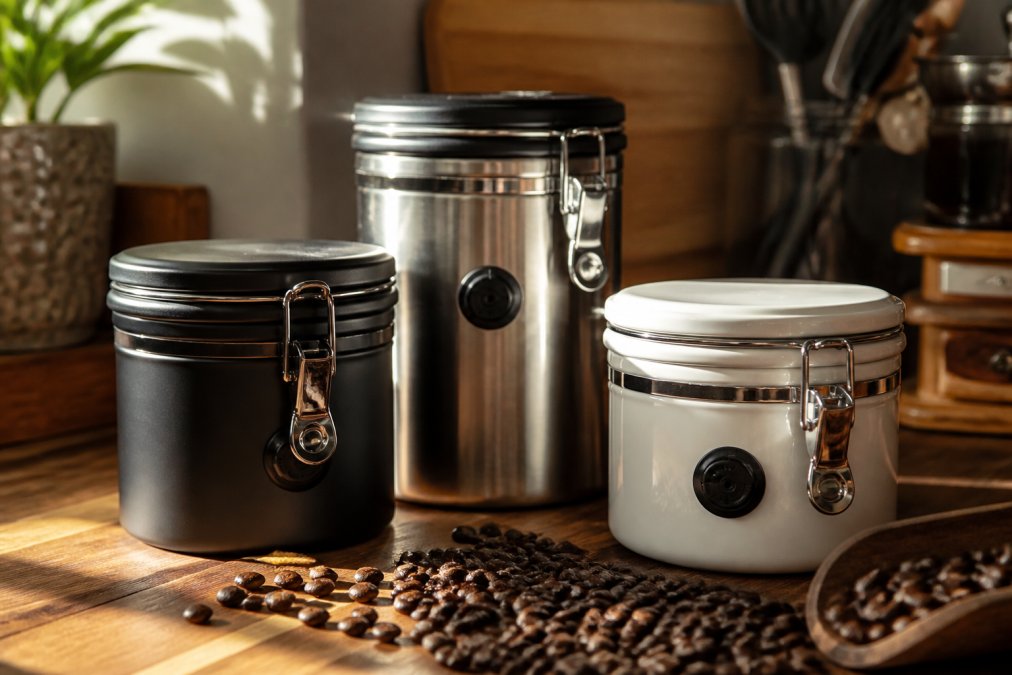
The best coffee storage container is an opaque, airtight vessel with a one-way valve, made from ceramic, stainless steel, or dark-tinted glass. This combination blocks light, prevents oxygen from entering, and allows residual CO₂ to escape without letting air back in.
Why One-Way Valve Bags Outperform Glass Jars
Clear glass jars are one of the most common storage mistakes. They look attractive on a kitchen counter, but they expose beans to light degradation every time sunlight or kitchen lighting hits them. Even indirect light causes measurable flavor loss over days.
One-way valve bags solve a problem that most rigid containers can't: they allow CO₂ from degassing to escape while keeping oxygen out. This is especially important in the first week after roasting, when beans are actively off-gassing. Sealing freshly roasted beans in a rigid, fully airtight container without a valve can cause pressure buildup.
For long-term storage beyond two weeks, transfer beans from a one-way valve bag into an opaque ceramic or stainless steel canister with a silicone-sealed lid. This gives you the best of both worlds: valve-assisted degassing early on, then a more strong seal once the initial CO₂ release slows down.
How to Store Roasted Coffee Beans Step by Step
Follow this protocol to protect your beans from roast date to final brew:
-
Check the roast date. Before anything else, confirm when the beans were roasted. Freshly roasted beans need 24-72 hours of rest for most brew methods (longer for light roasts). Don't grind immediately after roasting.
-
Keep beans whole. Only grind what you need immediately before brewing. Pre-grinding accelerates oxidation and flavor loss faster than any other single variable.
-
Choose the right container. Use an opaque, airtight container with a one-way valve. Ceramic and stainless steel are the most reliable materials. Avoid plastic, which is porous and can absorb and transfer odors.
-
Store at stable room temperature. Aim for a cool, dry spot away from direct sunlight, heat sources, and humidity. A closed cabinet away from the stove and oven is ideal. Ambient temperature between 60°F and 75°F is the target range.
-
Minimize air exposure each time you open the container. Scoop quickly, reseal firmly, and press out excess air if using a resealable bag.
-
Buy in quantities you'll use within two to four weeks. This is the single most underrated storage habit. No container, however good, fully compensates for beans sitting too long.
-
Label your container with the roast date. It takes ten seconds and prevents you from unknowingly brewing three-week-old beans when you thought they were fresh.
Freezing Coffee Beans: When It Helps and When It Hurts
Freezing coffee beans extends shelf life when done correctly, but it introduces two serious risks: freezer burn and condensation. The key is understanding when freezing makes sense and how to do it without damaging bean integrity.
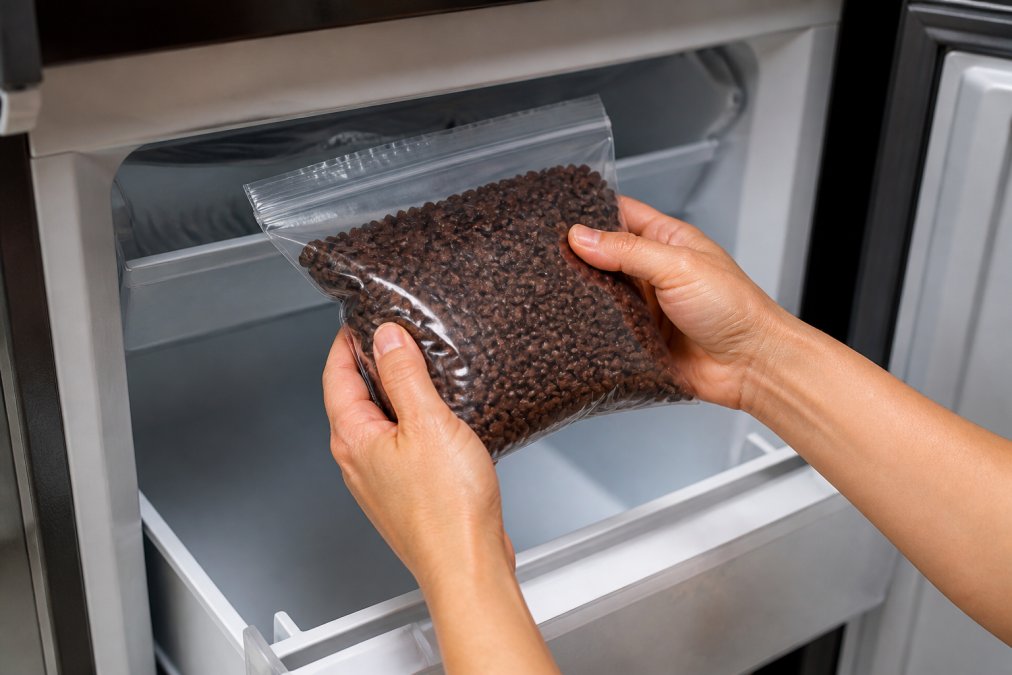
Freezing makes sense when you've purchased more beans than you can use within three to four weeks, or when you want to preserve a limited seasonal release. The cold temperature slows oxidation and degassing significantly, effectively pausing the aging process.
The rules for freezing correctly are strict:
- Divide beans into single-use portions before freezing. Never freeze a large bag and repeatedly thaw and refreeze it.
- Use vacuum-sealed bags or airtight freezer bags with as much air removed as possible.
- Label each portion with the roast date and freeze date.
- Once removed from the freezer, bring the sealed bag to room temperature before opening. This prevents condensation from forming on the beans themselves.
According to the Specialty Coffee Association's guidance on green and roasted coffee storage, temperature stability is critical to preserving flavor compounds in roasted coffee, and rapid temperature changes are among the most damaging factors.
Troubleshooting Freezer Burn and Condensation
Freezer burn on coffee beans appears as a whitish, matte coating on the surface of the bean. It's caused by moisture sublimation: water molecules inside the bean migrate to the surface and evaporate into the dry freezer air. Freezer-burned beans taste flat and woody, with none of the brightness you'd expect from a quality roast.
Condensation is the other major risk. If you open a frozen bag before it reaches room temperature, warm ambient air hits the cold beans and moisture deposits directly onto the surface. That moisture then gets absorbed into the porous bean structure, triggering premature extraction of bitter compounds and accelerating staleness.
The fix for both problems is the same: use proper vacuum sealing and always allow frozen beans to fully reach room temperature in their sealed container before opening. This typically takes 30-45 minutes on a kitchen counter.
Signs of Stale Coffee Beans You Shouldn't Ignore
The most reliable indicator of stale coffee is aroma, or the absence of it. Fresh whole bean coffee smells complex and alive: fruity, nutty, chocolatey, or floral depending on the origin and roast. Stale beans smell faint, musty, or like cardboard.
Beyond aroma, watch for these signs:
- No crema on espresso. Crema forms from CO₂ released during extraction. When beans are stale, they've already off-gassed, and crema becomes thin or nonexistent.
- Flat, one-dimensional flavor. Stale coffee tastes either bitter and harsh or hollow and papery, with none of the layered flavor profile that made the beans worth buying.
- Oily, sticky surface. While some dark roasts naturally show surface oils, excessive oiliness on medium or light roasts can indicate oxidation of the bean's lipids.
- No bloom when brewing pour-over. Fresh beans release CO₂ when hot water hits them, causing a visible bloom. If there's no bloom, the beans have already off-gassed and are likely stale.
As documented in the National Coffee Association's coffee freshness guidance, the sensory experience of coffee degrades measurably once beans are past their optimal freshness window, with aroma loss being the first and most consistent indicator.
Buying in Smaller Batches and Sustainable Storage Habits
Most coffee goes stale not because of poor containers but because people buy too much at once. A 12-ounce bag of beans brewed as two cups per day lasts about two weeks for a single person, which aligns well with the two-to-four-week peak freshness window. A one-pound bag for the same person pushes the outer edge of that window.
The practical advice: buy in quantities that match your actual consumption rate, not your optimistic estimate of it.
Sustainable storage habits also reduce waste significantly. Reusable stainless steel or ceramic canisters eliminate the need for single-use packaging on every purchase. If you're ordering roasted-to-order beans, the one-way valve bag they arrive in is already designed for short-term storage, so you don't need to transfer them immediately.
A few additional habits worth building:
- Order on a schedule that matches your consumption, not one that stockpiles beans.
- Store different origins or roasts in separate containers to preserve their distinct flavor profiles.
- Keep a dedicated coffee canister rather than using repurposed food containers, which can transfer odors.
The EPA's guidance on reducing household food waste notes that buying in smaller, more frequent quantities is one of the most effective strategies for reducing food waste at home, and coffee is no different.
Humidity and altitude add another layer of complexity that most guides skip entirely. In high-humidity environments (above 60% relative humidity), moisture infiltration becomes a much more active threat. If you live in a coastal or tropical climate, a canister with a truly airtight silicone seal matters more than it would in a dry, high-altitude city like Denver. At altitude, lower atmospheric pressure slightly accelerates degassing, which means beans in high-altitude kitchens may hit their peak brewing window a day or two earlier than the timelines above suggest.
Frequently Asked Questions
How long do whole roasted coffee beans stay fresh?
Whole roasted coffee beans hold their best flavor for two to four weeks after roasting when stored in an airtight, opaque container at room temperature. The whole bean structure protects the interior from oxygen exposure far longer than ground coffee, which goes stale within days. If you need to store beans beyond a month, a properly sealed, single-use freezer bag can extend shelf life to around three months without significant flavor loss, provided you avoid repeated freeze-thaw cycles.
Is it better to keep coffee beans in a bag or a container?
The roaster's original bag with a one-way valve is often the best short-term option because the valve lets carbon dioxide escape during degassing without letting oxygen in. For longer storage, transfer beans to an opaque, airtight container made from ceramic or stainless steel. Avoid clear glass jars, light degradation accelerates staling. Whatever you choose, the key factors are an airtight seal, no light exposure, and a stable ambient temperature away from heat sources.
Should you store coffee beans in the freezer or the fridge?
The freezer works for long-term storage only if you freeze beans in single-serving, airtight portions and never refreeze them. The fridge is generally a poor choice: it runs at temperatures that cause condensation each time you open the bag, and the porous surface of roasted beans absorbs food odors easily. For beans you plan to drink within two to four weeks, a cool, dark pantry at stable room temperature consistently outperforms refrigeration for preserving aroma and flavor profile.
How can you tell if roasted coffee beans have gone bad?
The clearest sign is a flat or rancid smell where the bright, roasty aroma has faded completely. Fresh beans have an oily sheen and produce a bloom of carbon dioxide when hot water hits the grounds; stale beans look dull and barely bloom. Taste-wise, stale coffee turns thin, papery, or sour without the pleasant acidity of fresh coffee. If your beans have been open for more than a month at room temperature, those sensory cues are a reliable indicator that freshness has passed its peak.
Keeping coffee fresh from roast to cup takes more than a good bag. The right container, the right storage environment, and the right buying habits all work together to protect the flavor profile you paid for. The Holy Grounds Coffee Co roasts every order to order, so your beans arrive at the beginning of their freshness window, not the end. Pair that with the storage protocol in this guide and you'll taste the difference in every cup. Find Your Perfect Roast and start your order today.
This article was written using GrandRanker