

Why Roast-to-Order Coffee Matters: A Freshness Guide
Table of Contents
- Why Roast-to-Order Coffee Matters for Flavor
- How to Tell If Coffee Beans Are Fresh
- Understanding the Coffee Degassing Process
- How to Store Coffee Beans for Freshness
- Roast-to-Order vs. Store-Bought: The Real Difference
- Brewing Adjustments for Fresh Roast-to-Order Beans
- Conclusion
Last Updated: August 13, 2026
Why Roast-to-Order Coffee Matters for Flavor
Fresh coffee tastes dramatically different from stale coffee. The difference isn't subtle, it's the gap between a smooth, nuanced cup and one that tastes flat and bitter. This is where roast-to-order coffee becomes essential for anyone serious about their morning ritual.
When beans are roasted, they immediately begin losing the volatile aromatic compounds that make coffee taste extraordinary. Within days, oxidation accelerates this loss. A bag of coffee sitting on a shelf for weeks or months has already surrendered much of what made it special. The Holy Grounds Coffee Co roasts each order fresh, meaning your beans arrive at their peak, not weeks into their decline.
The science is straightforward: freshly roasted beans contain carbon dioxide that was created during the roasting process. This CO2 is trapped inside the bean structure, and it's essential for proper extraction when you brew. Stale beans have lost most of this gas, which fundamentally changes how water interacts with the grounds. You end up extracting less flavor, less body, and less of the sweetness that defines a good cup.
Here's what most coffee guides miss: the difference between roast-to-order and store-bought isn't just freshness. It's about the entire supply chain. When you order from The Holy Grounds Coffee Co, your beans go directly from the roaster to your door. No warehouse sitting. No retail shelf time. No mystery about when those beans actually hit the roaster.
How to Tell If Coffee Beans Are Fresh
Fresh coffee beans have a distinct appearance and aroma that stale beans simply don't have. The most reliable indicator is the roast date printed on the bag, this single piece of information tells you everything you need to know about freshness.
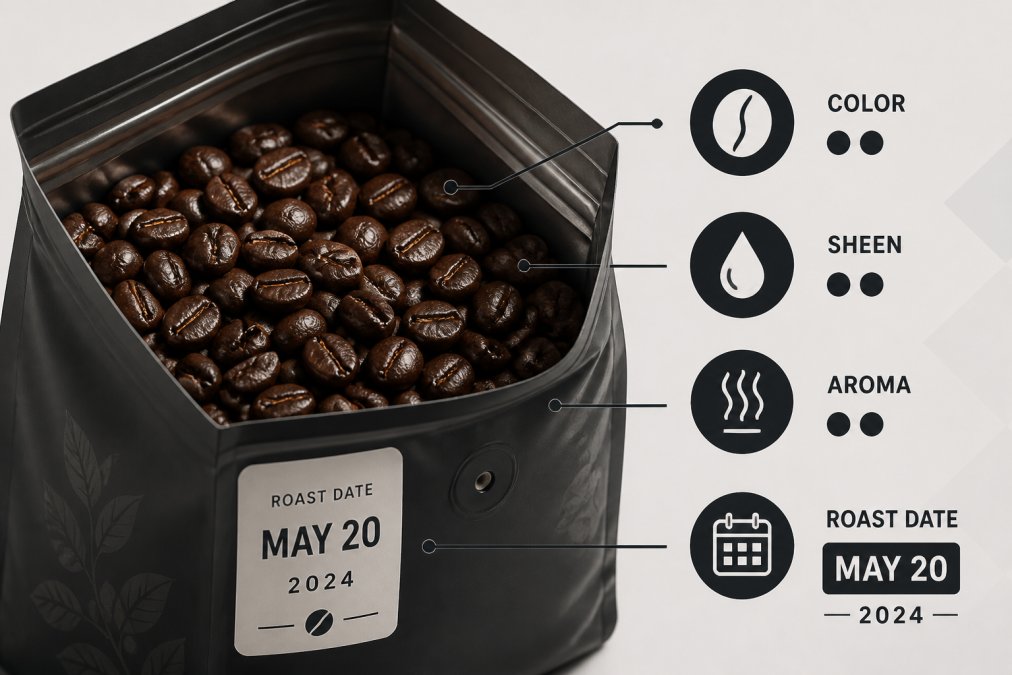
Look for beans roasted within the last two weeks. Beans roasted more than a month ago have already lost significant flavor complexity. The visual signs of freshness include a glossy sheen on darker roasts and a rich, uniform color. Beans that look dull or grayish have oxidized, the oils that give coffee its flavor have broken down.
Smell is another powerful indicator. Fresh beans smell vibrant and aromatic. The aroma should be inviting and complex, not flat or musty. When you open a bag of fresh roast-to-order coffee, the smell hits immediately, that's the carbon dioxide and volatile compounds still present in the bean. If a bag smells faint or has any stale, cardboard-like notes, the beans have aged past their prime.
The bloom test during brewing also reveals freshness. When you pour hot water over fresh grounds, they should visibly puff up within seconds. This is the carbon dioxide escaping. Stale grounds barely move. If your coffee doesn't bloom, you're working with old beans.
Understanding the Coffee Degassing Process
Degassing is the process where carbon dioxide gradually escapes from roasted coffee beans over time. This happens immediately after roasting and continues for weeks. Understanding this process is central to why roast-to-order coffee matters.
During the roasting process, heat causes chemical reactions inside the bean, primarily the Maillard reaction, which creates hundreds of flavor compounds and generates carbon dioxide as a byproduct. This CO2 gets trapped inside the bean structure. Once the bean cools, that trapped gas is what makes fresh coffee taste alive and complex.
The degassing timeline follows a predictable pattern. In the first 24-48 hours after roasting, beans release CO2 rapidly. This is why many coffee professionals recommend waiting a few days before brewing, the beans are still too gassy and can over-extract, creating harsh, bitter flavors. But here's the critical part: after that initial window, degassing slows dramatically, but the loss of flavor compounds accelerates.
What Happens During the First 24-48 Hours
The first two days after roasting are when CO2 release is most dramatic. Beans roasted yesterday are still actively degassing. If you brew them immediately, the excess gas can interfere with water's ability to extract evenly. Some areas of the grounds extract too much, creating bitterness. Other areas extract too little, leaving sour notes.
This is why specialty roasters often recommend waiting 3-5 days before brewing. The beans have released enough CO2 to allow proper extraction, but they haven't yet lost the volatile aromatic compounds that make coffee taste exceptional. This is the sweet spot, the peak flavor window.
Peak Flavor Window and Extraction
The peak flavor window typically lasts about 2-3 weeks from the roast date. During this time, the beans have released enough CO2 for proper extraction, but the volatile aromatic compounds and natural sweetness are still intact. After three weeks, oxidation begins degrading these compounds noticeably.
Extraction, the process of pulling flavor from grounds into water, depends on the bean's condition. Fresh beans with adequate CO2 allow water to move through the grounds evenly. This creates balanced extraction: sweetness, acidity, body, and specific flavor notes all come through clearly. Stale beans don't allow this even water flow. Some areas over-extract, creating harsh, burnt flavors. Other areas under-extract, leaving sour or thin notes.
The grind size also becomes more critical with fresh beans. Because fresh beans have better structure and more CO2, they respond better to precise grinding. A burr grinder like the Burr Coffee Grinder, KF8024 ($39.99) gives you the control needed to dial in extraction perfectly with fresh beans. Blade grinders create inconsistent particle sizes, which compounds the extraction problems with stale beans.

How to Store Coffee Beans for Freshness
Storage conditions directly impact how quickly beans lose flavor. The enemies of coffee freshness are light, heat, oxygen, and humidity. Control these four factors and your beans stay fresher longer.
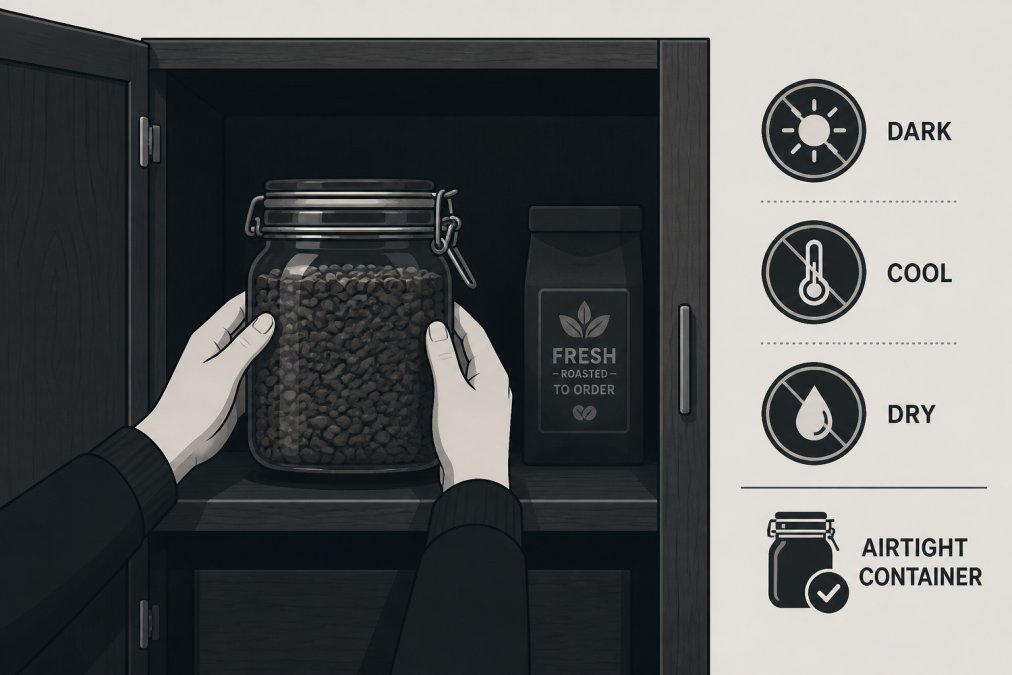
Keep beans in an airtight container in a cool, dark place. A kitchen cupboard away from the stove works perfectly. Never store coffee in the refrigerator or freezer, the temperature fluctuations and moisture damage the beans. Room temperature (around 65-70°F) is ideal. The container should minimize oxygen exposure. Glass jars with airtight seals work well. Some specialty bags come with one-way valves that let CO2 escape while preventing oxygen from entering, these are excellent for storage.
Whole beans stay fresh longer than ground coffee. Grinding exposes vastly more surface area to oxygen, accelerating oxidation. Grind only what you'll use within a few days. This is why investing in a quality grinder matters. The Blade Coffee Grinder, KF2150 ($19.99) gives you grinding capability without the expense of a burr grinder, making it easier to grind small batches fresh.

Buy smaller quantities more frequently rather than large quantities stored for months. A two-week supply is ideal. This approach ensures you're always drinking relatively fresh coffee. With roast-to-order services like The Holy Grounds Coffee Co, you can set up a subscription that arrives every two weeks, keeping you in the peak flavor window constantly.
Light exposure degrades beans quickly. Opaque containers are better than clear ones. UV light accelerates oxidation and breaks down the flavor compounds that make coffee special. If your storage container is clear, keep it in a dark cupboard rather than on the counter.
Roast-to-Order vs. Store-Bought: The Real Difference
The practical difference between roast-to-order and store-bought coffee comes down to freshness, consistency, and control over the supply chain.
Store-bought coffee, whether from a grocery store or a specialty retailer, has been roasted days or weeks before you buy it. The roast date on the bag tells the story. Even premium coffee sitting on a shelf for three weeks has already lost significant flavor. The beans have been exposed to light, temperature fluctuations, and oxygen. The volatile aromatic compounds have degraded. The natural sweetness has faded.
Roast-to-order coffee is roasted after you place your order. Your beans go from roaster to packaging to your door within days. This means you're drinking coffee at its actual peak, when the balance between degassing and flavor preservation is optimal. The difference in taste is immediate and obvious. Fresh coffee has complexity, sweetness, and clarity. Stale coffee tastes flat and one-dimensional.
The supply chain also matters. Store-bought coffee passes through multiple hands: roaster to distributor to retailer to you. Each step introduces time delays and storage conditions you can't control. Roast-to-order eliminates these middlemen. The Holy Grounds Coffee Co roasts and ships directly, meaning you know exactly when your beans were roasted and how they were handled.
Consistency is another advantage. When you order from a roast-to-order service, you get beans roasted on a specific date. You know what to expect. Store-bought coffee varies wildly. One bag might be five days old. The next might be four weeks old. This inconsistency makes it impossible to dial in your brewing technique.
Cost is the one area where store-bought has an advantage, it's typically cheaper. But this comes at the expense of flavor. The question isn't whether roast-to-order costs more. It's whether the dramatic improvement in taste justifies the price difference. For anyone serious about coffee, the answer is yes.
Brewing Adjustments for Fresh Roast-to-Order Beans
Fresh beans require slightly different brewing adjustments than older coffee. The higher CO2 content and intact flavor compounds demand precision.
Start by waiting 3-5 days after the roast date before brewing. This allows excess CO2 to escape while preserving the volatile aromatic compounds. If you brew immediately, the gassiness interferes with extraction and creates harsh flavors.
Grind size becomes more critical with fresh beans. Because fresh beans have better structure, they respond more dramatically to grind adjustments. If your coffee tastes sour, your grind is too coarse, water isn't extracting enough. If it tastes bitter, your grind is too fine, water is over-extracting. With stale beans, these problems are masked because there's less flavor to extract anyway. With fresh beans, every adjustment matters.
Water temperature should be between 195-205°F. Fresh beans actually benefit from slightly cooler water than some people use. The intact flavor compounds extract more efficiently at this temperature, and you're less likely to over-extract and create bitterness.
Brew time also matters more with fresh beans. For pour-over methods, aim for 3-4 minutes. For French press, 4 minutes is standard. For espresso, the extraction time is typically 25-30 seconds. These times are starting points, adjust based on taste. If you're using fresh roast-to-order beans, you'll notice that slight adjustments create noticeable differences in flavor. This is a feature, not a bug. It means you're working with high-quality, responsive coffee.
The bloom phase, that initial pour of water before full brewing, becomes even more important with fresh beans. Spend 30-45 seconds blooming. This allows CO2 to escape in a controlled way, setting up even extraction for the rest of the brew. Stale beans barely bloom. Fresh beans bloom dramatically.
Water quality matters too. If your tap water is heavily chlorinated or mineral-heavy, it will interfere with the flavor of fresh coffee. A simple carbon filter pitcher removes chlorine. If you have very hard water, consider a basic water softener or use filtered water. With stale coffee, water quality is almost irrelevant because there's so little flavor to preserve. With fresh roast-to-order coffee, water quality directly impacts what you taste.
The difference between mediocre coffee and exceptional coffee comes down to one thing: freshness. Roast-to-order coffee matters because it delivers beans at their actual peak, when the flavor is most complex, the sweetness is most pronounced, and the entire sensory experience is most rewarding. Store-bought coffee, no matter how premium the origin or how skilled the roaster, has already begun its decline by the time it reaches you.
At The Holy Grounds Coffee Co, every batch is roasted to order and shipped directly to your door. You're not paying for old inventory or guessing about roast dates. You know exactly when your beans were roasted and you get them while they're still in their peak flavor window. Start with a single-origin bean like our Whiskey Barrel Aged ($23.99), a single-origin Guatemalan aged 30 days in a bourbon barrel and then roasted to order, to experience the difference freshness makes. Find Your Perfect Roast today and taste what coffee is actually supposed to taste like.

Frequently Asked Questions
How long does roast-to-order coffee stay fresh?
Roast-to-order coffee reaches peak flavor 3-7 days after roasting and stays fresh for 2-4 weeks when stored properly in an airtight container away from light and heat. The degassing process, where carbon dioxide escapes from the beans, begins immediately after roasting. During the first 24-48 hours, excessive gas can interfere with extraction, but after this resting period, the beans are ideal for brewing. Flavor gradually declines as oxidation occurs and volatile aromatic compounds diminish over time.
What is the difference between roast-to-order and store-bought coffee?
Roast-to-order coffee is roasted specifically when you order it, preserving peak flavor, aroma, and natural sweetness. Store-bought coffee has already been roasted, packaged, and sitting on shelves, sometimes for weeks or months, allowing oxidation to degrade the flavor profile and acidity. Roast-to-order beans deliver superior sensory experience because volatile aromatic compounds remain intact. The roast date on store-bought bags is often weeks old, meaning you're brewing beans past their peak flavor window.
How do I know if my coffee was roasted to order?
Check the roast date on the bag, it should be within the last few days, ideally 2-5 days before arrival. Roast-to-order coffee from suppliers like The Holy Grounds Coffee Co roasts your beans after you place your order, so the roast date will be very recent. Fresh beans should have a glossy appearance and release a strong, complex aroma when you open the bag. If the roast date is more than 2-3 weeks old or unlisted, the coffee was likely roasted in bulk and stored, not roasted to order.
Does roast-to-order coffee really taste better?
Yes. Roast-to-order coffee tastes noticeably better because the Maillard reaction, the chemical process that creates flavor complexity during roasting, is preserved in the beans longer. Fresh beans deliver brighter acidity, richer body, and more pronounced origin notes. Store-bought coffee loses these qualities as oxidation occurs and volatile aromatic compounds escape. The difference is most apparent in specialty single-origin beans, where subtle flavor notes depend on freshness. Brewing fresh beans with proper grind size and bloom technique amplifies this advantage.
This article was written using GrandRanker