

Premium Coffee Beans for Home Brewing: 2026 Guide
Table of Contents
- How We Selected These Premium Coffee Beans
- Quick Comparison: Premium Coffee Beans at a Glance
- Coffee Roast Levels Explained: Choosing the Right Profile
- The Best Single-Origin Beans for Home Brewing
- Best Blends for Espresso and Everyday Brewing
- How to Grind Coffee Beans at Home for Better Extraction
- How to Store Coffee Beans for Freshness After They Arrive
- Subscription vs. One-Time Purchase: Which Works for You
Last Updated: August 11, 2026
Home brewing has never been more serious, or more rewarding. At The Holy Grounds Coffee Co, we've watched home coffee culture shift from convenience into craft, and the single biggest variable is bean quality. Premium coffee beans for home brewing aren't just marketing; they're the difference between a cup that's fine and one that stops you mid-sip.
This guide covers every bean in our current lineup, explains how roast levels and origin affect your cup, and gives you practical knowledge to brew better starting tomorrow.
How We Selected These Premium Coffee Beans
Every bean in this guide is roasted to order. Freshly roasted coffee degasses for 24-72 hours after roasting, then hits its flavor peak within the following week or two. Beans sitting in a warehouse for three weeks before reaching your door have already lost significant aromatic complexity.
Our selection criteria: origin traceability, roast consistency, flavor clarity, and performance across common home brewing methods. We pulled from single-origin offerings grown by smallholder farmers, who tend smaller plots and produce smaller yields, typically meaning more attention to processing quality. According to Specialty Coffee Association's guide to coffee quality, traceability to a specific farm or cooperative is one of the clearest indicators of specialty-grade coffee.
Every option here is priced at $23.99, keeping the decision focused on flavor, roast level, and brewing compatibility.
Quick Comparison: Premium Coffee Beans at a Glance
| Bean | Roast Level | Flavor Profile | Best Brew Method |
|---|---|---|---|
| Kenya | Light-Medium | Citrus, floral, effervescent | Pour over, drip |
| Colombia | Medium | Dried orange, berry, chocolate | Drip, French press |
| Guatemala | Medium | Dark chocolate, bright fruit, butterscotch | Pour over, drip |
| Sumatra | Medium-Dark | Earthy, dried fruit, syrupy body | French press, espresso |
| Bali Blue | Medium-Dark | Dark chocolate, molasses, brown sugar | Espresso, French press |
| 6 Bean Blend | Dark | Bold, bittersweet, full body | Espresso |
| African Espresso | Medium-Dark | Bright, complex, fruity | Espresso, drip |
| House Blend | Medium | Clean, smooth, consistent | Drip, any method |
Coffee Roast Levels Explained: Choosing the Right Profile
Roast level is the single most misunderstood variable in home brewing. Most people default to dark roast because it "tastes stronger," but strength is a brew ratio issue, not a roast issue. Roast level determines flavor character, acidity, body, and how forgiving the bean is at different grind sizes.
Light Roast: High Acidity, Floral and Fruit Notes
Light roast coffee is roasted to the "first crack," where the bean just splits. The result retains more original character: terroir, altitude, processing method. Expect bright acidity, floral aromas, and fruit-forward notes. Light roasts are more sensitive to grind consistency and water temperature.
Medium Roast: Balance, Sweetness, and Versatility
Medium roast is where most home brewers live. Sugars caramelize, acidity softens, and body increases. You get a balanced cup with lower extraction risk. Medium roast works across drip, pour over, and French press without demanding precision.
Dark Roast: Bold Body, Bittersweet Finish
Dark roast pushes past the second crack, where roasting characteristics dominate. Origin recedes; bittersweet notes, heavy body, and low acidity move forward. Dark roast is ideal for espresso, where concentrated extraction amplifies bold flavors.
The Best Single-Origin Beans for Home Brewing
Single-origin coffee is traceable to a specific region, farm, or cooperative. That traceability allows roasters to select for specific flavor profiles rather than blending to mask inconsistency.
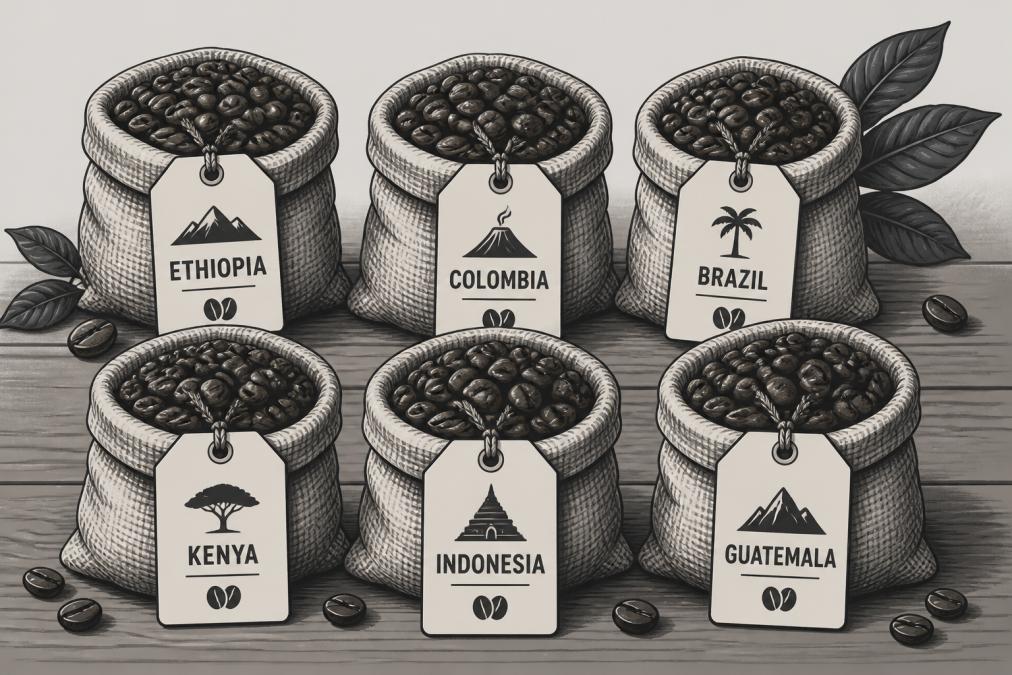
Kenya ($23.99): Bright Citrus and Floral Complexity
Kenya is the most demanding bean in the lineup and the most rewarding when executed well. Grown in Othaya, Nyeri County at 1,700-1,890 meters, this fully washed bean delivers bright acidity, orange and lemon notes, and floral effervescence unlike anything from Central or South America. High altitude slows bean development, concentrating sugars and acids for remarkable clarity.
Best for: pour over and drip. Use water around 200°F and a medium-fine grind.
Colombia ($23.99): Dried Orange, Berry, and Chocolate
Colombia is the entry point for single-origin exploration. Sourced from smallholder farmers in Medellín, this medium roast produces dried orange, berry, and chocolate notes with smooth mouthfeel. It's interesting but not challenging, the bean you reach for when you want something elevated without complexity.
Works across multiple brew methods. French press brings out chocolate and body; pour over highlights berry and citrus brightness.

Guatemala ($23.99): Dark Chocolate, Bright Fruit, Butterscotch
Guatemala from Antigua is a medium roast with genuine depth. Dark chocolate leads, followed by bright fruit acidity and butterscotch sweetness. Volcanic soil and high altitude produce a bean that feels elevated without requiring pour-over precision.

Sumatra ($23.99): Syrupy Body and Earthy Depth
Sourced from the Aceh region through the Koperasi Baitul Qiradh cooperative, this bean undergoes wet-hulling unique to Indonesian production, creating characteristic syrupy body and earthy, low-acid profile. Tasting notes include dark chocolate, dried fruit, and lingering finish.
Sumatra is one of the most forgiving beans to brew, the heavy body masks minor extraction errors that would ruin lighter roasts. French press is its natural home; it also pulls well as espresso.
Bali Blue ($23.99): Dark Chocolate and Molasses
Bali Blue from smallholder farmers in Kintamani sits at medium-dark roast, bringing out dark chocolate, molasses, and brown sugar notes. It's richer and sweeter than Sumatra, less earthy, more confectionery. If you habitually add sugar to coffee, try Bali Blue black first.

Best Blends for Espresso and Everyday Brewing
Blends deliver consistency across bags and seasons, something single origins can't always guarantee. The best blends are engineered for specific purposes: espresso extraction, everyday drip, or balance.
6 Bean Blend ($23.99): The Espresso Workhorse
The 6 Bean Blend is a dark roast built for espresso. Drawing from six origins worldwide, it produces full-bodied, bittersweet shots with crema that holds. Dark roast blends withstand high pressure and short espresso extraction, keeping bold roast character present. This is the daily driver for serious home espresso setups.
African Espresso ($23.99): Kenya, Tanzania, and Ethiopia Combined
Most espresso blends rely on Central and South American beans for reliable body and low acidity. African Espresso combines Kenya, Tanzania, and Ethiopia into a medium-dark blend that brings brightness and fruit complexity to the espresso cup. The result is a shot with more character than standard dark blends, without over-roasting harshness.
House Blend ($23.99): Clean and Consistent Every Time
The House Blend is a medium roast from select Central and South American coffees. It's smooth, clean, and consistent, ideal for drip coffee drinkers who want a reliable cup every morning. Works with any brew method and grinder setting in the medium range.
How to Grind Coffee Beans at Home for Better Extraction
Grind quality is where most home brewers leave the most improvement on the table. You can buy exceptional beans, store them perfectly, and use filtered water, yet still produce a mediocre cup because the grind is inconsistent.
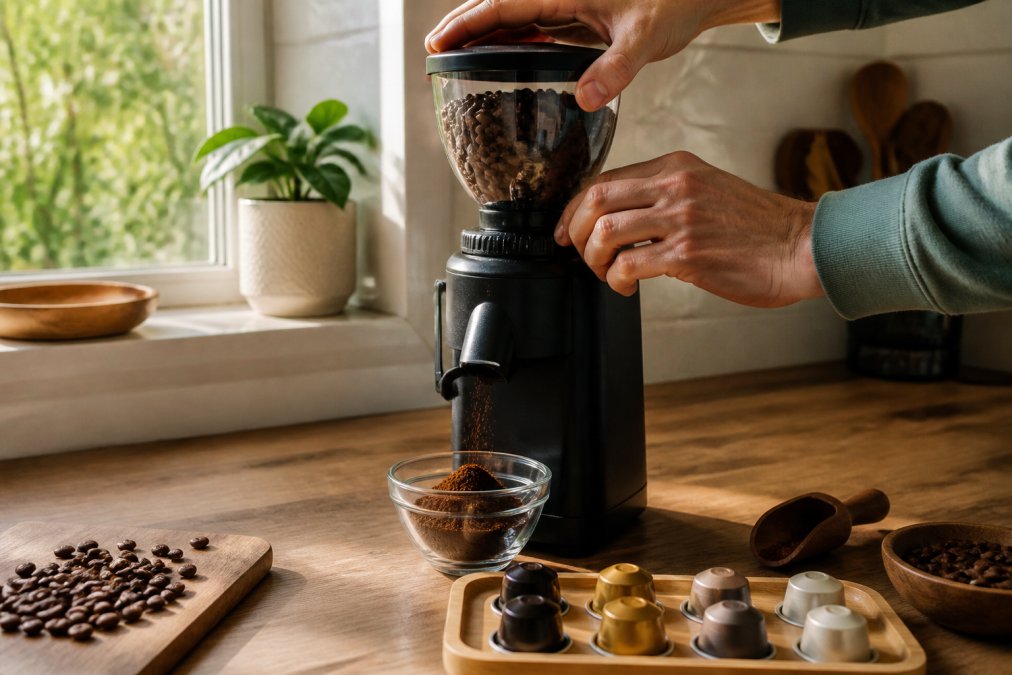
Grind Size by Brew Method
Grind size controls extraction rate. Too fine, and water moves through too slowly, over-extracting bitter compounds. Too coarse, and water moves too fast, under-extracting and leaving the cup thin and sour.
| Brew Method | Grind Size | Visual Reference |
|---|---|---|
| French press | Coarse | Coarse sea salt |
| Drip coffee maker | Medium | Regular sand |
| Pour over | Medium-fine | Table salt |
| Espresso | Fine | Powdered sugar |
| Cold brew | Extra coarse | Rough gravel |
The bloom step matters for pour over and drip: pour twice the weight of water as coffee and wait 30-45 seconds. This releases CO2 from freshly roasted beans and allows even extraction. Skipping the bloom produces uneven, channeled extraction.
Burr Grinder vs. Blade Grinder: Why Consistency Matters
A blade grinder chops beans randomly, producing fine powder and large chunks in the same batch. Those different particle sizes extract at different rates, fine particles over-extract and turn bitter while coarse chunks under-extract and taste sour.
A burr grinder crushes beans between two abrasive surfaces set at a fixed distance, producing uniform particle size. That consistency allows you to dial in specific extraction. The Burr Coffee Grinder KF8024 at $39.99 is the most direct upgrade most home brewers can make. Paired with the French Press Bundle at $69.99, it's a complete setup without espresso complexity.
According to the National Coffee Association's brewing guide, grind consistency is one of the most controllable variables in home brewing quality.
How to Store Coffee Beans for Freshness After They Arrive
Proper storage protects against four enemies: oxygen, moisture, heat, and light. All four accelerate staling that begins the moment beans are roasted.
The practical rules:
- Store in an airtight container with a one-way valve if possible. One-way valves let CO2 escape during degassing without letting oxygen in.
- Keep at room temperature, away from heat sources. The refrigerator introduces moisture; the freezer works only for long-term unopened storage.
- Avoid clear containers on bright countertops. UV exposure degrades coffee oils quickly.
- Buy quantities you'll use within two to three weeks of the roast date. Roast-to-order means your beans arrive at peak freshness; the shelf life clock starts from roast date, not delivery date.
Beans roasted weeks before shipping have already completed much degassing and flavor development before reaching you. Beans roasted to order arrive still releasing CO2, which is why your first bloom on a fresh bag will be noticeably more active.
As documented in research on coffee freshness and degassing, the degassing period immediately after roasting is when volatile aromatic compounds are most active and flavorful.
Subscription vs. One-Time Purchase: Which Works for You
One-time purchase makes sense if:
- You want to try a specific origin before committing
- Your consumption varies week to week
- You prefer choosing different beans each time
Subscription makes sense if:
- You go through a bag every one to two weeks consistently
- You want to ensure you never run out mid-week
- Freshness is a priority; subscriptions deliver roast-to-order coffee on predictable schedules
Start with a one-time purchase of two or three different origins to identify what works for your setup and palate before committing to a recurring order. For home office drinkers going through two or more bags monthly, a subscription eliminates reordering friction and ensures you're always brewing from fresh stock.
According to the Specialty Coffee Association's consumer research on home brewing habits, home coffee consumption has grown steadily, with freshness cited as the top purchasing factor among specialty coffee buyers.
Frequently Asked Questions
What makes coffee beans considered premium?
Premium coffee beans typically come from specific growing regions at high altitudes, are processed with care (washed, natural, or honey process), and are roasted in small batches close to your order date. Arabica varieties dominate the specialty coffee tier because of their nuanced flavor profiles, ranging from bright citrus acidity to deep chocolate sweetness. Freshness is the biggest differentiator: beans roasted to order and shipped within days retain far more aroma and complexity than pre-packaged grocery store coffee sitting on a shelf for months.
Does the roast date matter for premium coffee beans?
Roast date is one of the most important factors in cup quality. Freshly roasted whole beans release CO2 through a process called degassing, which peaks in the first few days after roasting. Brewing too soon can cause uneven extraction; brewing too late means the beans have gone stale. For best results, brew between 5 and 21 days after the roast date. Roasted-to-order services ship beans within days of roasting, giving you a much longer peak freshness window than pre-packaged options.
How should I store premium coffee beans to keep them fresh?
Store whole beans in an airtight, opaque container at room temperature, away from direct sunlight, heat, and moisture. Avoid refrigerating beans: the temperature fluctuations and ambient odors degrade flavor. A one-way valve bag, like the kind used by specialty roasters, slows oxidation well. Only grind what you plan to brew immediately, since ground coffee loses its aroma within 30 minutes of grinding. Most premium whole beans stay at peak flavor for two to four weeks after the roast date when stored this way.
What is the difference between single-origin and blend coffee beans?
Single-origin beans come from one farm, cooperative, or defined region, so the flavor profile reflects that specific terroir, altitude, and processing method. A Kenya single origin, for example, delivers bright acidity and floral notes you cannot replicate with a blend. Blends combine beans from multiple origins to create a consistent, balanced cup year-round, which makes them ideal for espresso extraction where repeatability matters. Neither is objectively better: single origins reward exploration, while blends deliver reliability.
Are expensive coffee beans actually worth the price compared to grocery store options?
The cost difference comes down to sourcing, freshness, and roast quality. Specialty-grade arabica beans sourced directly from smallholder farmers and roasted to order cost more because the supply chain is shorter and more transparent. Grocery store coffee is typically roasted weeks or months before you buy it, and the flavor reflects that shelf time. For home brewers who invest in decent equipment, fresher premium beans make a noticeable difference in sweetness, body, and aftertaste from the first cup.
Finding the right bean for your setup comes down to matching roast level to brew method, origin character to your flavor preferences, and grind consistency to extraction quality. The lineup of premium coffee beans here covers the full spectrum, from the bright, effervescent Kenya to the bold, bittersweet 6 Bean Blend, all roasted to order and delivered to your door. Browse the full selection and Find Your Perfect Roast at The Holy Grounds Coffee Co.
This article was written using GrandRanker